EV Charger Installation
EV Charger Installation, Home & Business
B.E Electrical Solar & Battery installs home and business EV chargers across Yorke Peninsula and Mid-North South Australia, from our Kadina base.
- Based in Kadina
- SAA-accredited designer
- 15+ years experience
EV Charger Installation
Charge your car properly, at home or at work
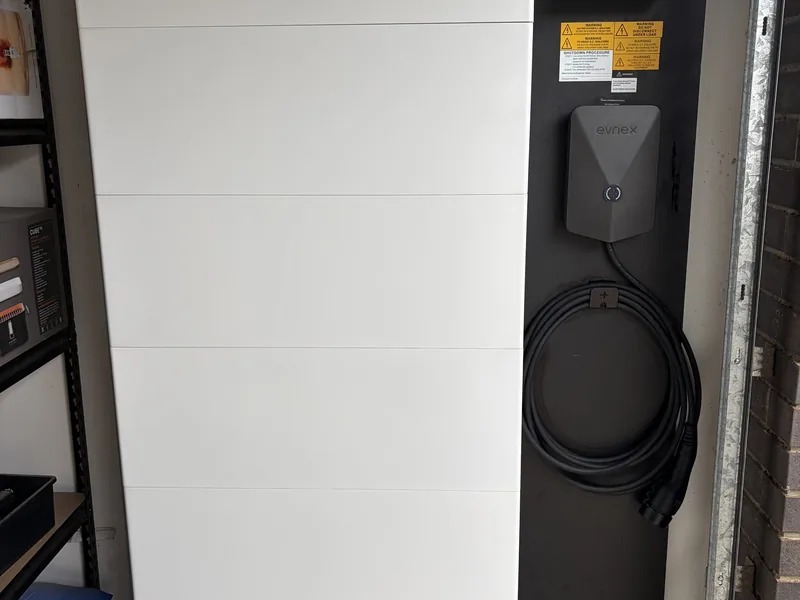
A trickle charge from a standard power point works in a pinch, but a dedicated EV charger is faster, safer and built for the job. As a solar-led electrician, we do not just bolt a charger to the wall. We look at your switchboard, your supply and your solar, then install a charger that fits how you actually drive and, where possible, runs your car on your own sunshine.
Single-phase or three-phase
Most homes are single-phase and suit a 7 kW charger, which comfortably tops up an EV overnight. If your property has three-phase supply, a faster charger up to 22 kW may be an option, which is worth considering for business sites or high-kilometre drivers. We check what your supply and switchboard can actually handle and recommend the right charger, rather than selling you more speed than your car or your supply can use.
Switchboard and supply considerations
An EV charger is a serious, sustained load, so it needs to be added to your electrical system properly. Older switchboards, particularly ones still running ceramic fuses, often need an upgrade or a dedicated circuit with the right protection before a charger goes in. That is not upselling, it is safety and compliance. We assess your board up front so there are no surprises, and any upgrade is done by the same licensed local team doing the install.
Charge from your own solar
This is where our solar-led approach pays off. Solar-aware chargers such as Zappi, or a Fronius setup, can prioritise your surplus solar so your car charges on power you would otherwise export for a few cents. If you already have rooftop solar, or are adding it, we can integrate the charger so your daytime generation goes into the car instead of back to the grid. Pair it with battery storage and you can even charge on stored solar after dark. Charging on your own sunshine is the cheapest, cleanest way to run an electric vehicle, and it is the natural fit for a business that already runs solar led by B.E Electrical.
Single-phase vs three-phase EV charging
The right charger depends on your supply, your car and how you drive. The table below sets the two common options side by side. We check what your switchboard and supply can actually handle before recommending one.
Single-phase vs three-phase home and business EV charging
| Charger | Circuit | Typical use | When it makes sense |
|---|---|---|---|
| Single-phase, up to 7 kW | Dedicated single-phase circuit off your switchboard | Overnight charging for a typical EV at home | Most homes: comfortably fills a daily driver overnight on standard single-phase supply |
| Three-phase, up to 22 kW | Dedicated three-phase circuit | Faster top-ups, where your car accepts three-phase | Business sites, fleet vehicles or very high-kilometre drivers who need a quick turnaround |
Real charge speed also depends on what your vehicle can accept. Many EVs cap on-board AC charging at 7 to 11 kW, so three-phase only helps if your car can use it. We confirm this against your vehicle before quoting.
Indicative cost of an EV charger install
EV charger installation cost depends on how far the charger sits from your switchboard and whether your board needs an upgrade. As an indicative 2026 guide, a home EV charger installation commonly runs about $2,000 to $3,000. It costs more where a long cable run or a switchboard upgrade is needed, and less where the board is modern and the charger sits close by. Rather than quote a figure we cannot stand behind, we assess your site and give you a clear fixed price.
How we work
Our process
-
Site and switchboard check
We assess your supply, switchboard and where the charger needs to go, plus any solar you have or plan to add.
-
Charger selection and quote
We recommend the right charger, single or three-phase, solar-aware where it suits you, and give you a clear fixed price.
-
Compliant install and handover
Licensed installation to standard, tested and certified, with a walk-through so you know how to use it.
Good to know
Frequently asked questions
Where we work
Servicing Yorke Peninsula & Mid-North SA
From our Kadina base we cover the Copper Coast, the Mid-North, the Barossa and northern Adelaide.